01 / Cutting
Bar preparation
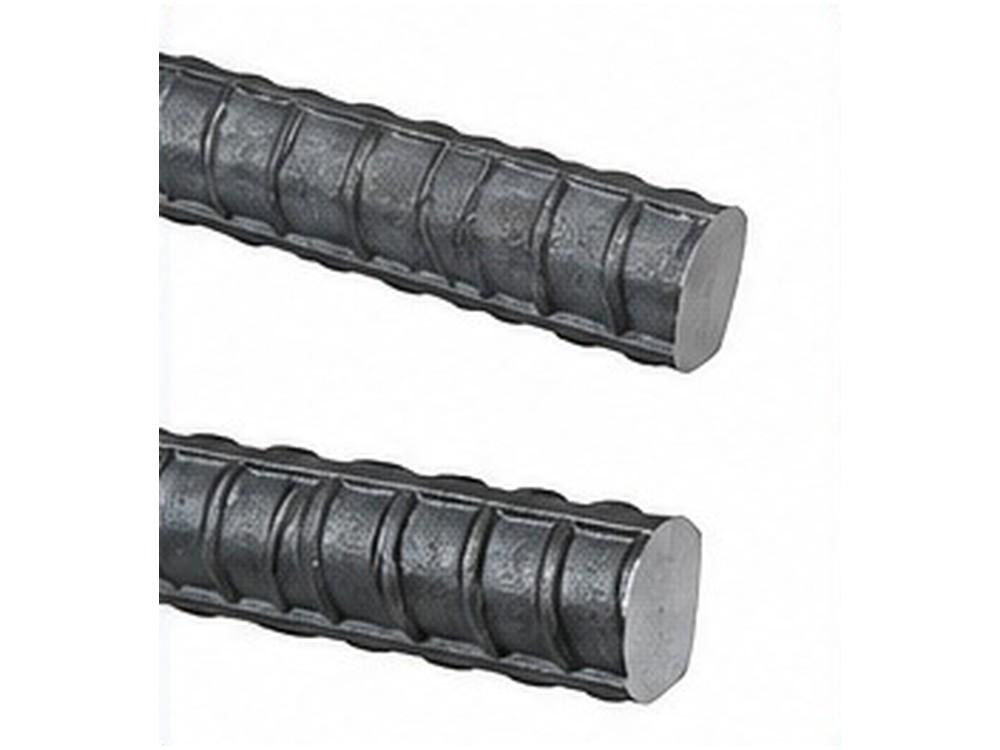
Rebar ends are accurately cut square and cleaned to ensure proper insertion.

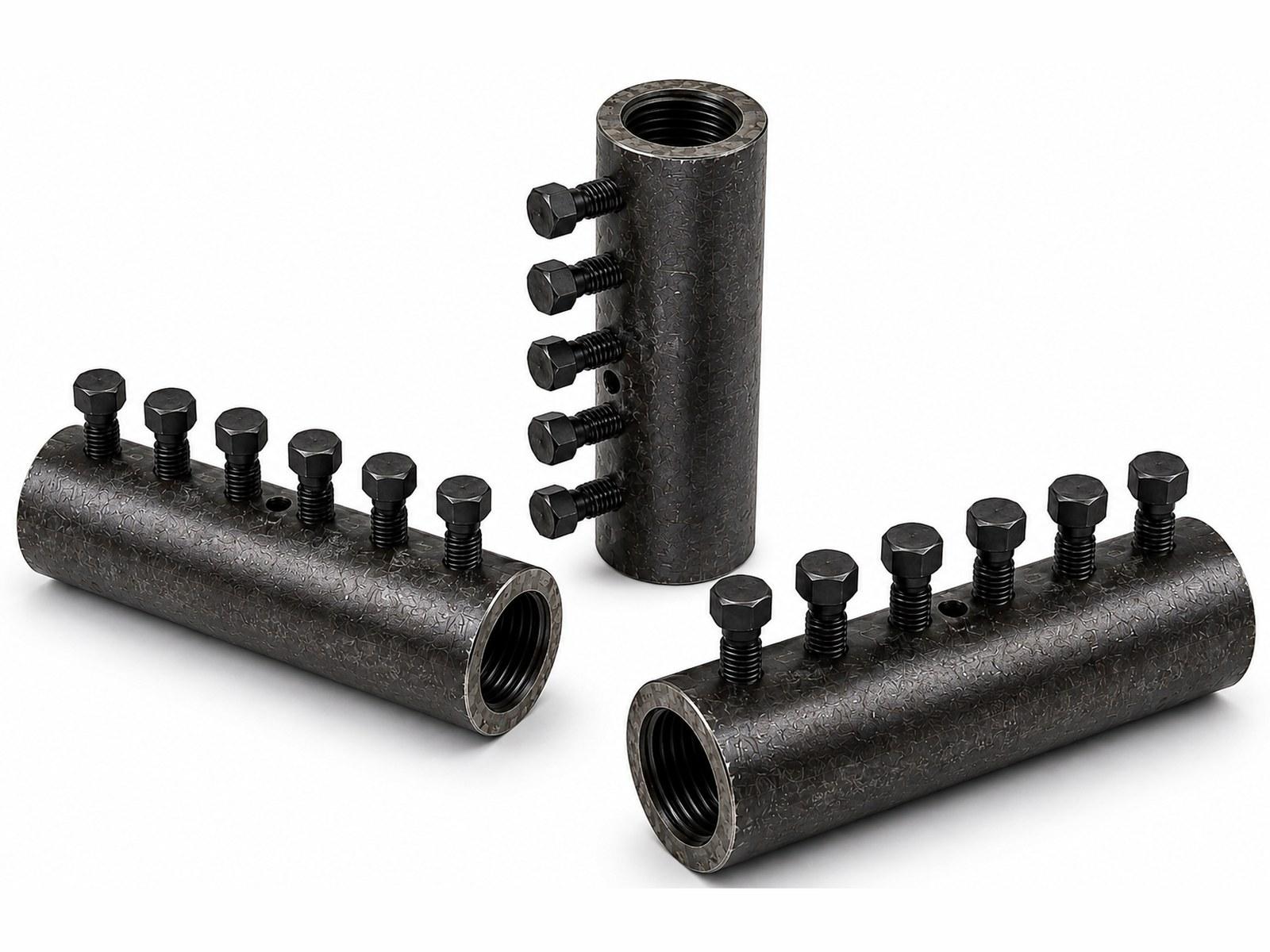
Bolted couplers for joints where neither bar can be turned. No threading, no welding, no bar preparation.
The MBT coupler grips the bar with a row of high-strength bolts instead of a thread, so neither bar has to be rotated or prepared. That makes it the answer for long, bent or already-fixed bars, for repair and retrofit work, and for anywhere the working space is too tight to turn a sleeve.
Sizes run from 10 to 32 mm. The sleeve grows with the bar — 22 mm outside diameter and 80 mm long at 10 mm bar, up to 60 mm and 200 mm at 32 mm — and each size carries its own bolt count and bolt size, listed in the table below.
Five steps, all of them on site with ordinary spanners. Nothing is threaded or forged beforehand, which is why an MBT splice suits bars that are already fixed in place.
Rebar ends are accurately cut square and cleaned to ensure proper insertion.
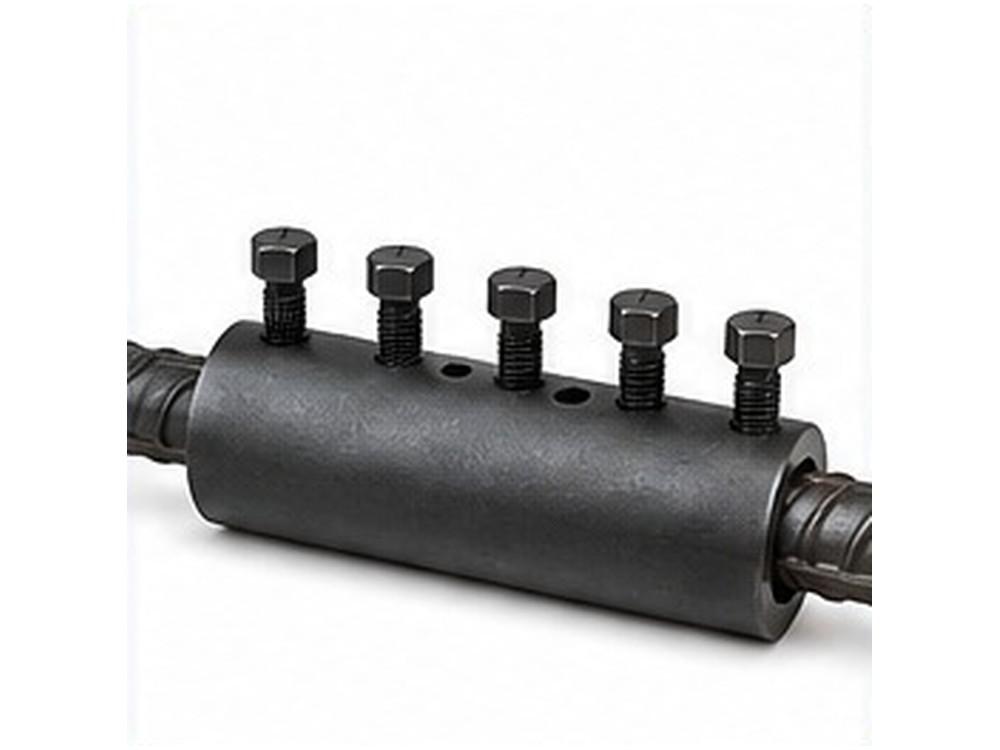
Insert both rebar ends into the MBT coupler to the specified depth.
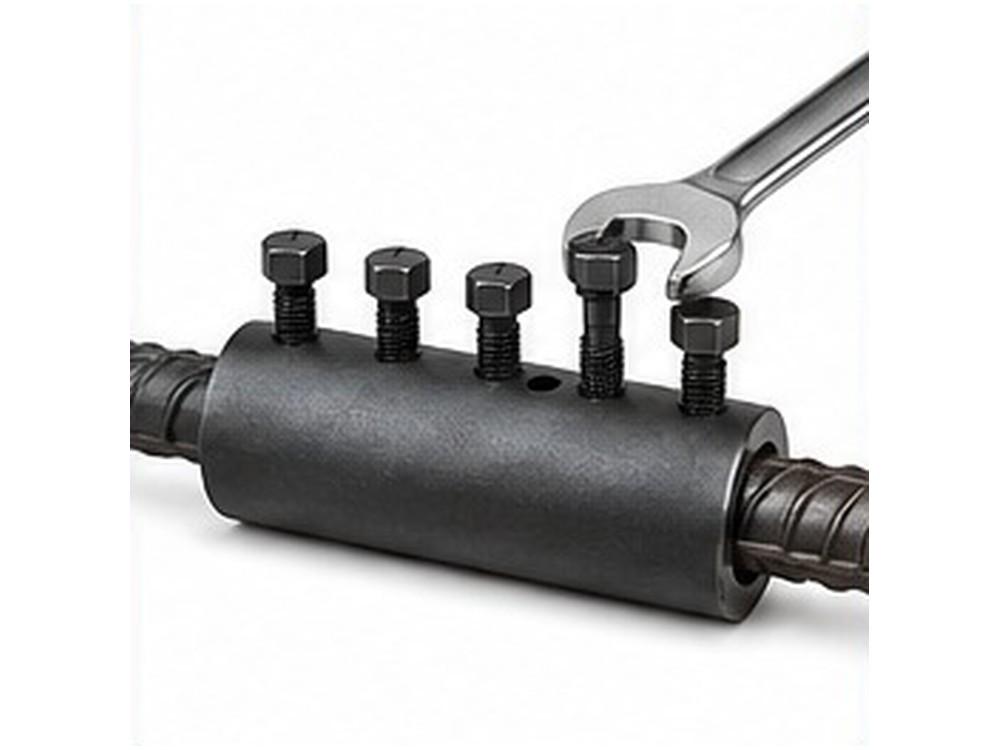
Tighten the coupler’s shear bolts in the specified sequence and to the required torque.
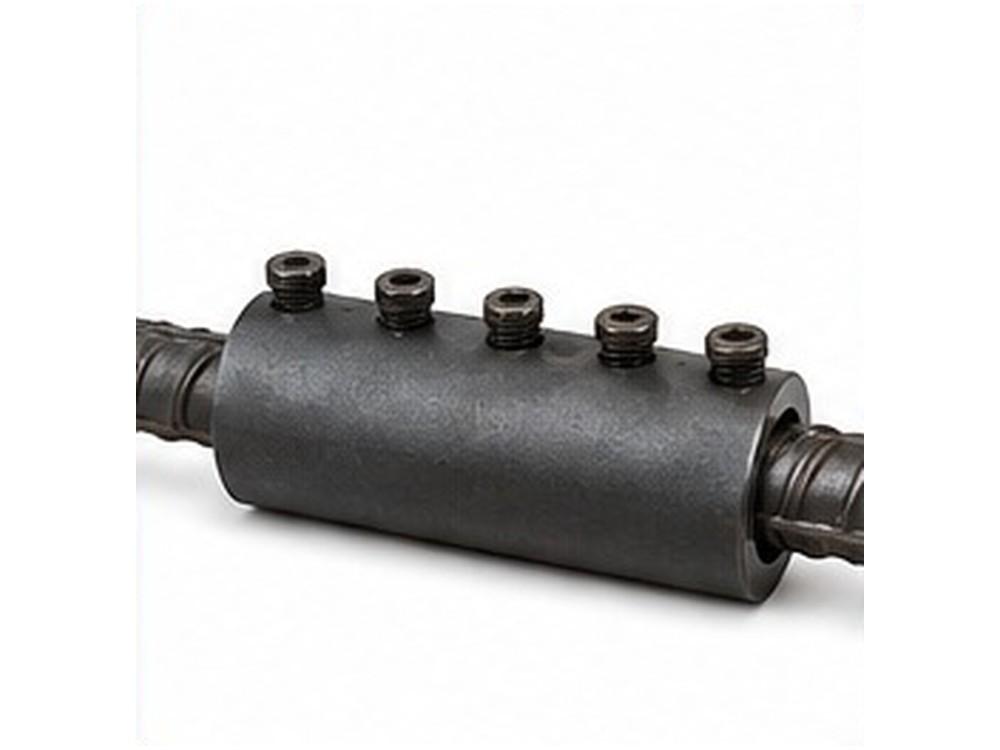
Once the required torque is reached, the bolt heads shear off, indicating that the connection has been properly installed.
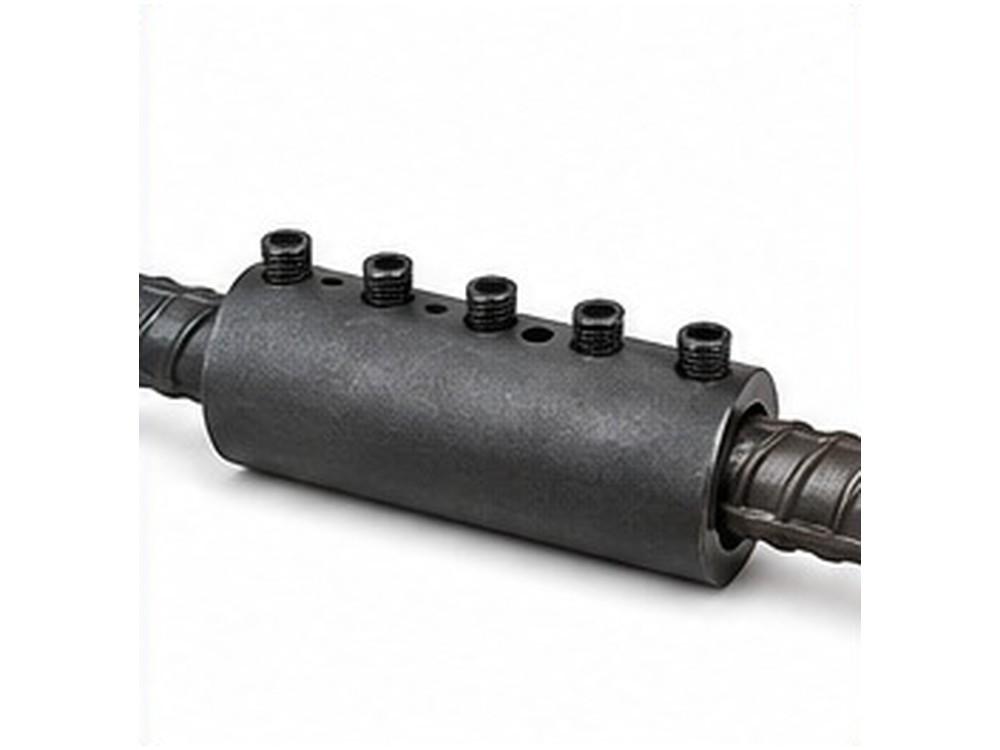
Check that all bolt heads have been properly sheared off and that the rebars are inserted to the required depth.
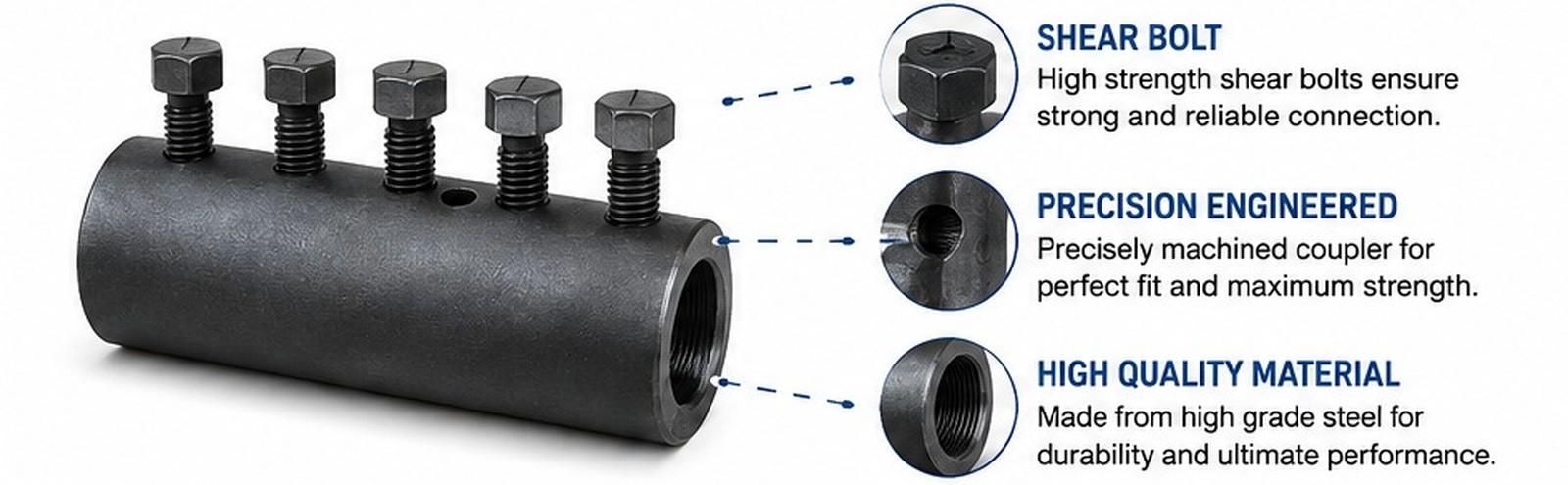
Because no bar rotation is needed, an MBT splice can be made where a threaded coupler cannot physically be turned — long bars, curved bars, and cages already tied into position.
| MBT size | OD (mm) | Length (mm) | Total no. of bolts | Bolt size |
|---|---|---|---|---|
| 10 mm | 22 | 80 | 28 | 10 mm |
| 12 mm | 28 | 108 | 32 | 10 mm |
| 16 mm | 36 | 150 | 40 | 12 mm |
| 20 mm | 42 | 160 | 50 | 12 mm |
| 25 mm | 50 | 185 | 63 | 12 mm |
| 32 mm | 60 | 200 | 50 | 14 mm |
Material EN8D available.
A coupler earns its place wherever the reinforcement is too heavy, the joint too congested, or the pour too far apart in time for an overlap to be practical.
Column and shear-wall bars are joined floor by floor with no lap, so the cage stays open enough to place and vibrate concrete properly.
Piers, pier caps and decks are poured in stages. The thread waits under a cap and the next pour connects at full bar strength.
Viaducts, track slabs and station boxes, where every splice is inspected and has to carry documentation to the project authority.
The joint develops the bar, so force passes between bars instead of through the concrete around a lap.
No hot work, no welder qualification, no heat-affected zone to argue about in an inspection.
A lap doubles the steel at exactly the busiest point of a column. One sleeve does not.
Lap length is steel bought, cut, bent and tied purely to be overlapped. A coupler removes it from the order.
Thread, cap, deliver. On site the bar is offered up and turned in — no measuring out a lap.
Threads are cut to one standard and tested, so the joint made in month nine matches the joint made in month one.